
Going nowhere, fast
Australia's latest high-speed rail dream is a fast track to fiscal ruin.


Australia's federal government wants to build high-speed rail between Sydney and Newcastle, with the dream of one day linking the entire East coast from Brisbane to Melbourne. According to the just-published business case, Australia "can't afford not to do" it (an actual quote in the report) because it:
- Enables up to 160,000 new homes by 2061.
- Supports 99,000 new jobs by 2061.
- Adds $250 billion to Australia's economy by 2086.
- Delivers $12.7 billion in transport benefits.
- Generates $16.4 billion of productivity benefits.
- Saves more than 86,000 tonnes of carbon dioxide equivalent emissions.
Sounds good, until you start looking into it a little deeper. Indeed, the fact that this report came out of a supposedly "independent statutory agency" should send shivers down the spine of anyone concerned about the competency of Australia's public sector.
Let's start with the cost, which is essential when evaluating net benefits to the country. At a range of $55 to $90 billion depending on which page of the partly-redacted report you read, annual interest payments alone would run roughly $2.5 to $4.3 billion before a single, heavily-subsidised $31 ticket is sold.
That's a huge amount to pay for a route that will service a region of around 500,000 people, perhaps a tenth of which will use it to commute to Sydney. While that will inevitably grow over time, some context might help: total gross ticket revenue on the Sydney-Melbourne air route, Australia's two largest cities and the fifth busiest in the world, is only around $3 billion per year. There's just no way high-speed rail on this route will ever come close to achieving a positive return.
That alone should be enough to kill this project. But if it doesn't, then scrutiny should be aimed at the report's estimate of job creation: with NSW unemployment at 4% and a long infrastructure pipeline, most of them won't be 'created', but merely bid away from other projects. For example, to deliver on the full 99,000 figure would require the implausible task of cutting NSW's unemployment rate from 4% to 2.4% through a single infrastructure project, even after accounting for population growth.
The report also fails to account for what else the country could do with $90 billion worth of CapEx, whether that's housing, energy, other transit projects, or simply not saddling taxpayers with the debt in the first place.
I get that certain people are infatuated with high-speed rail, including the current Prime Minister. Personally, I'm a big fan of Japan's shinkansen network. But just because something works in another country doesn't mean we should replicate it in Australia. Japan has a different culture (e.g. less NIMBYism), rules and institutions that make things like land readjustment for new rail infrastructure – unthinkable in Australia – possible.
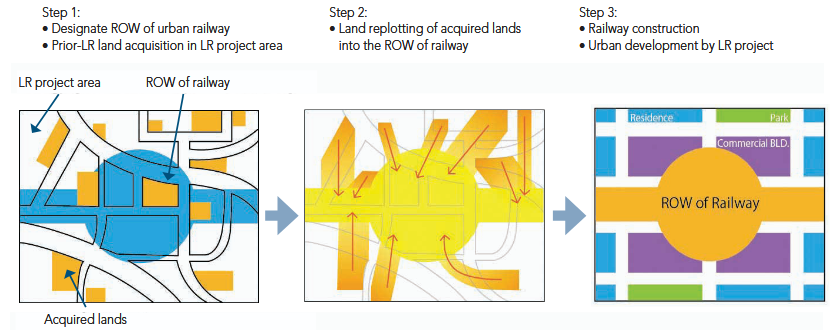
Add in the inevitable environmental reviews (the alternative of road upgrades, at less than half the price, was rejected largely on environmental grounds), union work requirements and NIMBY lawsuits, and the prospects of any net benefits are dim.
High-speed rail has been proposed in Australia every decade since the 1980s, each time driven by special interests rather than economic sense. The current Labor government has now wasted $660 million on the latest iteration. For the sake of the nation's finances, let's hope it doesn't waste too much more.


