
The GST windfall that isn't
State Premiers are performing generosity with a GST windfall that doesn't exist, adding to debt and stoking inflation at the worst possible time.


It might be April Fool's day, but sadly the latest Australian policy idea in response to the Iranian oil crisis is no joke. This stroke of genius came courtesy of NSW Premier Chris Minns, who – with the support of "my colleagues across the states" – is "considering forgoing any win for GST revenue due to prices being elevated and extremely high":
"Nobody wants to profit while people are doing it so tough, particularly across the Easter period."
How generous of him. Except that the NSW government, like its counterparts across the country, is deep in debt and running a structural cash deficit, which means any revenue 'forgone' simply converts a dollar of taxpayer relief into a dollar of new public debt.
But it's even more idiotic than that, because Minns is only looking at the response of a single component of GST to the oil shock. As an economist would say, he's engaging in partial equilibrium thinking by assuming every other component of the GST is constant. A useful analytical tool, sure; but that's just not how the world works.
In reality, there is no net GST windfall to forgo (there might be more royalties and company tax, but that's not what's being discussed). It's true that when fuel prices spike, nominal spending on fuel rises and GST revenue ticks up. But automotive fuel only accounts for around 3.3% of the CPI basket (which tries to approximate household budgets). When households spend more on fuel, they have less to spend on everything else, much of which will either see demand fall or prices rise as higher fuel costs ripple through the economy. A real oil supply shock — which is what we're experiencing — tends to suppress activity across the discretionary components of the household consumption basket, lowering overall GST revenue.
Basically, for the Iran shock to produce a GST 'windfall', the extra revenue from that 3% sliver of spending would have to outweigh the revenue collapse from the remaining 97% of the basket. That math doesn't math, and every economist in the country knows it. Even the ABS's broader 'operation of vehicles' category — which includes maintenance and spare parts on top of fuel — only sits at 4.4% of household consumption. It's just too small to matter for total GST revenue, given the drag higher oil prices will have on spending everywhere else in the economy.
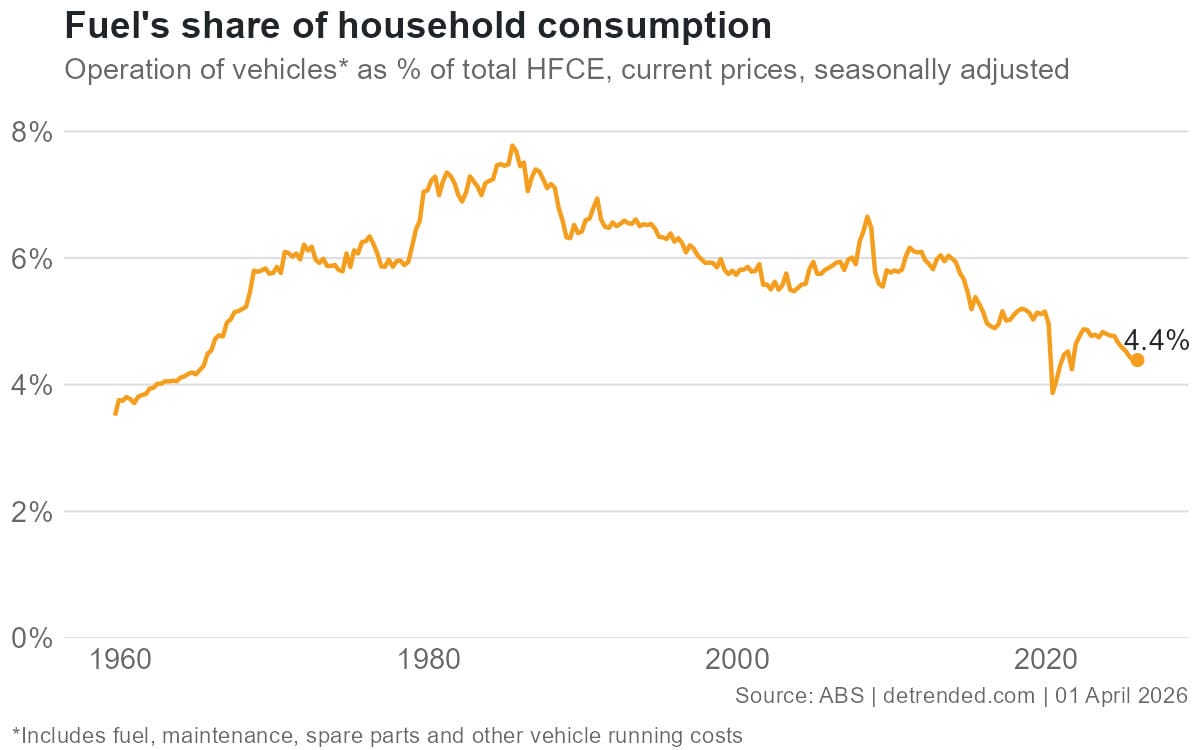
It might sound like a good deed, but don't be fooled: Australia's state Premiers aren't actually giving anything up, other than whatever economic credentials they might pretend to possess. They're performing generosity with revenue that won't materialise, handing out inflation-inducing cash that will make fuel shortages more likely while hoping that nobody will notice the extra debt when Budget time rolls around.


